/

There's a moment that most people get wrong. You finish a hard session, you feel accomplished, and you assume the work is done. It isn't. The hard part you just did was only the trigger. What happens in the hours and days after, while you rest, eat, sleep, and move gently, is where your body actually gets stronger.
Recovery has a reputation problem — it sounds passive. The truth runs the other way. Recovery is where adaptation happens, and skipping it quietly limits the results you’re working towards. This guide covers why recovery matters, what active recovery actually means, and how to build it into a routine you'll stick with.
Exercise doesn't build muscle. It breaks it down. A challenging workout creates microscopic tears in your muscle fibers, and that damage is the point. Your body reads it as a signal to repair the tissue and rebuild it slightly stronger than before. That repair happens during rest, not during the workout itself. Train without giving your body time to complete the cycle, and you're stacking damage on damage with no chance to build back.
A few things happen when you recover properly:
Put simply, the training stimulus only counts if your body has the chance to respond to it. That response is recovery.
The two categories serve different purposes, and the best routines use both. Understanding the difference is what turns recovery from an afterthought into a strategy.
Active recovery means light, easy movement that keeps blood flowing without adding meaningful stress. Think walking, easy cycling, gentle mobility work, foam rolling, or a relaxed yoga flow. The defining feature is that your own muscles are doing the work, just at a low enough effort to stay below the threshold that would tax the muscle groups you've been training.
The payoff is circulation. Gentle movement delivers nutrients to repairing tissue and helps clear the byproducts of a tough workout faster than sitting still would. On the day after a brutal session, twenty minutes of easy movement will almost always leave you feeling better than the couch will. It's the difference between stiffening up and staying loose.
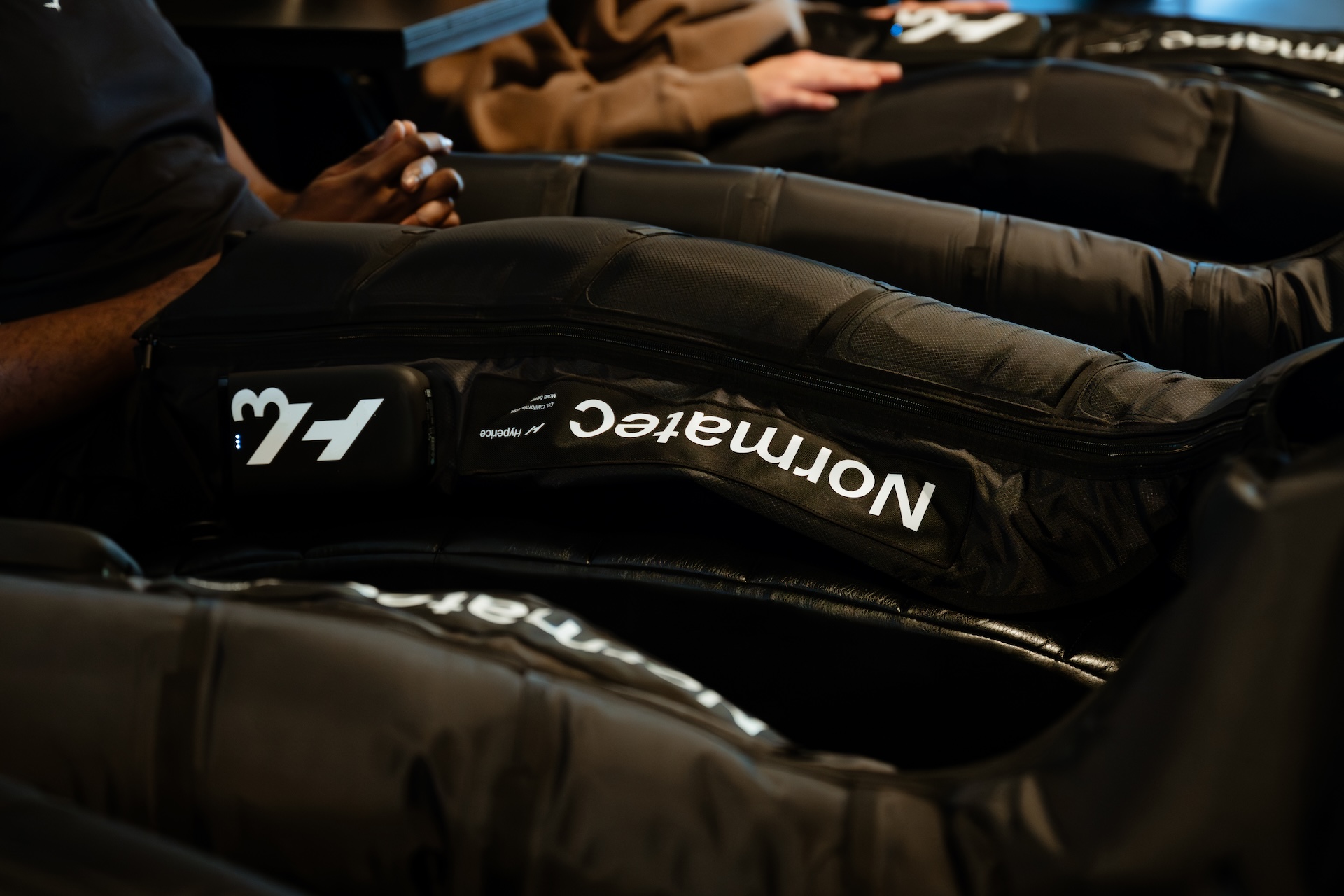
Passive recovery is where your body rebuilds without you driving the movement. At one end, that's true rest: a full day off, solid sleep, proper nutrition. At the other end, it's the assisted modalities that do the work for you, including compression, massage, and contrast therapy.
This is the half of recovery people tend to underinvest in, usually because the tools aren't easy to access at home. Compression has long been a favorite of athletes managing a heavy training load. Massage helps clear metabolic waste and releases the tension that builds up in overworked muscles. Heat and cold drive circulation and help manage inflammation. None of it requires effort from you, which is exactly the point on the days your body needs to shut down and rebuild.
At Traverse, we believe that a complete recovery practice uses both approaches. Active recovery keeps you moving between hard efforts. Passive recovery gives your body the deeper repair it can't get any other way. Lean only on one and you're leaving results on the table.
Progress doesn't only happen in the studio, it extends through the recovery practices that follow. The Recovery Lounge is the space we built to support that and is stocked with the assisted tools most people never get consistent access to.
If the studio is where you sweat it out, the Recovery Lounge is where you put yourself back together. Both Traverse locations offer a dedicated space curated for members to prepare for and recover from their toughest workouts. It's quiet by design, stocked with tools that actually move the needle, and built around the idea that recovery should feel as intentional as the training itself.
Here's what you'll find inside:
Pair the Lounge with our thermotherapy offerings, sauna and cold plunge, and you've got the full passive-recovery toolkit in one place. It's also why Traverse is built to get members ready for whatever they're training toward. The programming pushes you, and the recovery infrastructure makes sure you can keep showing up for it.
The best training plan in the world falls apart without recovery to support it. The good news is that recovering well isn't complicated. It needs the right habits, both active and passive, and a space that makes the harder half easy.
You don't have to choose between training hard and recovering well. At Traverse, they're the same membership and the same community. If you've been curious, come see the Recovery Lounge for yourself.